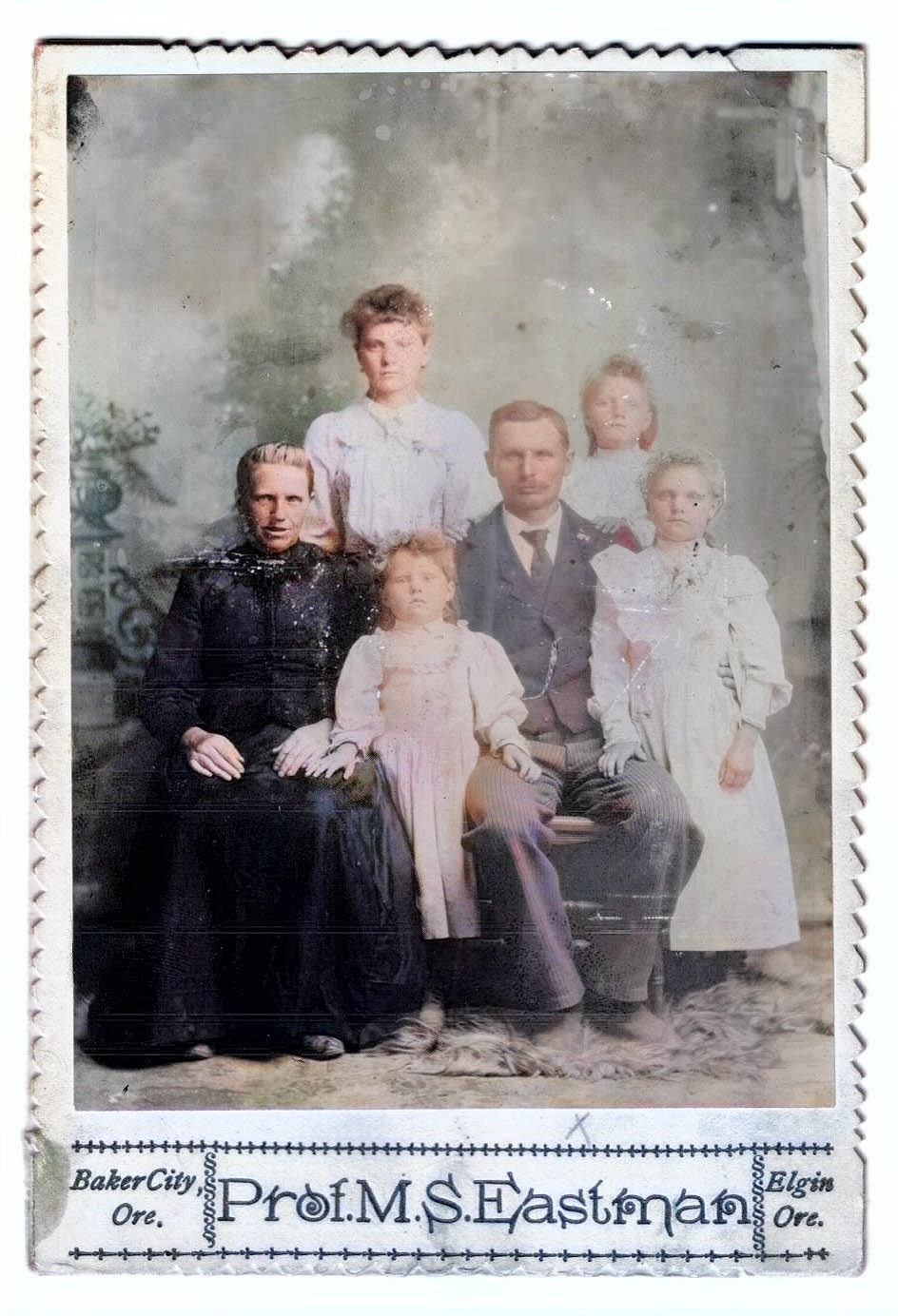
Part 2 – Mary Gullickson (Olson/Oxhovd) my 3rd great-grandmother
Mary was the first of 9 children born to Christen “Christ” Olson (Oxhovd) and Ingeborg “Emily” Ivarsdatter Polsture on January 15th, 1869 in Liberty Township, Wisconsin.
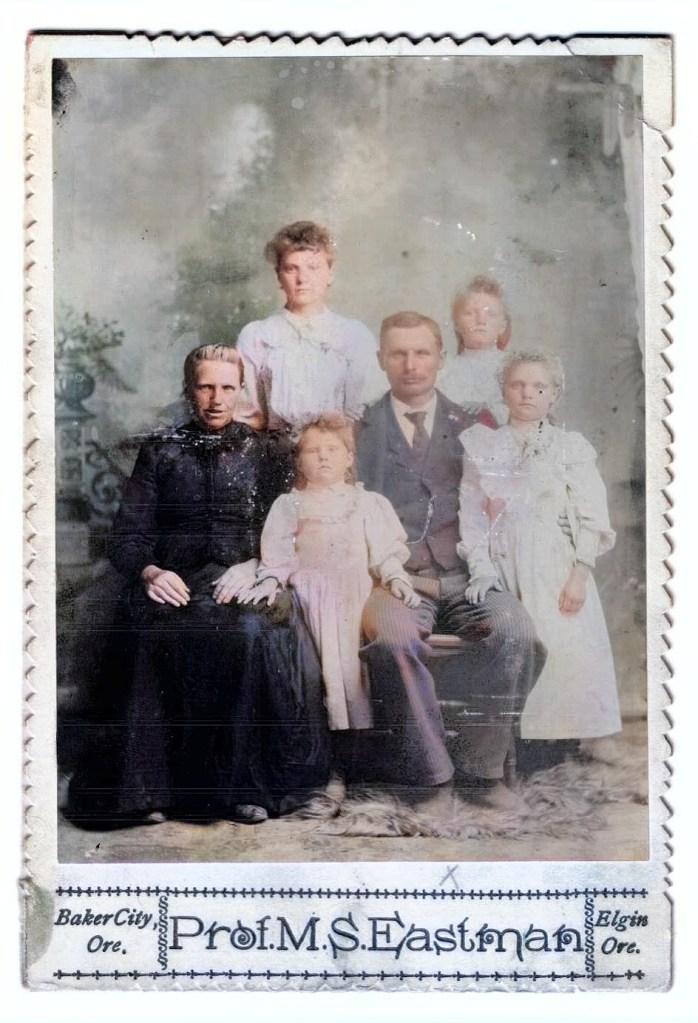
Christ and Emily were both born in Norway and immigrated to the United States with their families when they were very young. The earliest census report I could find was from 1870 when they had just started their family. Christ was working as a laborer and Ingebor (Emily) was keeping house and looking after one year old Mary.

At the time of the 1880 census, Christ is listed as a farmer and Emily is at home with their first 5 children.

I have so far been unable to find a 1890 census report for the family so we jump to 1900. By then, the family had moved to Minnewaukan, North Dakota, with 6 children still at home. Mary had moved out at this point and had married Lars Gullickson when she was 16 years old and he was 22. In 1900, Christ is listed as a carpenter and his older sons worked as a railroad laborer, general merchant, and a blacksmith. I like to think that the blacksmith (John) worked under and learned from Lars.

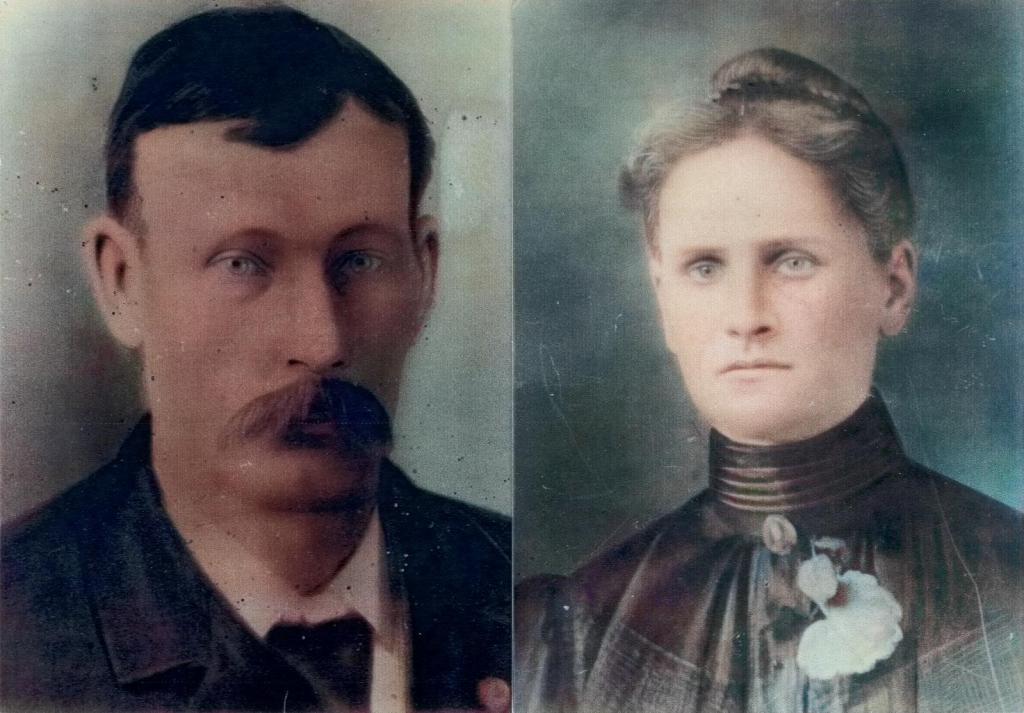
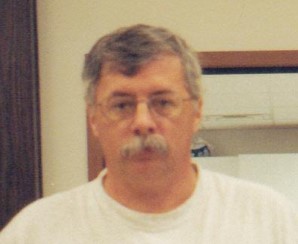
Fun fact: My uncle Joe looks almost exactly like Christ in the photo above. Same eyes, same nose, same mustache. The genetics are strong on this side of the family.
On another page of the 1900 census for Minnewaukan, we find Mary (30) living with Lars (36) and their 6 children. If you recall part 1 of the Gullickson branch entry, Lars was an integral part of the community, offering his blacksmithing services to all that were willing to travel to Minnewaukan.
Below is a story that was uploaded to ancestry.com by Maria Garlie who is either my 1st cousin 1x removed or half 1st cousin on my maternal side. The story itself was received from an “Aunt Ethel Oxtoby”, which is likely spelled wrong. I have no idea who aunt Ethel is.
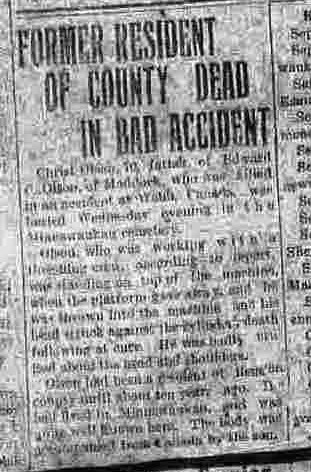
Before we get into the story, we have to briefly look at the death of Christ. Growing up I always heard that we were French-Canadian with absolutely nothing to prove it. I still have not been able to prove it, however, I did have many family members on my mom’s side visit Canada often. Christ actually died in Saskatchewan, Canada in 1920. Below is the news article regarding the deadly accident he was in. Unfortunately, I have not been able to track down the actual newspaper or article. I plan to update this post if I can get a better quality image.
Pioneer Biography of Mary Gullickson I found at Bismarck done in 1937″.
Mary Olson who married Lars Gullickson was also named Maria Oxhovd in census records in Manitowoc, Wisconsin in the late 1800s.
Marie Olson (Oxhovd) came to Walcott in Richland county with her family. She was born near Manitowoc, Wisconsin on the shores of Lake Michigan on January 15th, 1869. Her father, Christ Oxhovd, was a farmer by occupation. He was born in Norway in 1848 and died in Canada in 1920. Her mother, Ingeborg Polstrue was born in 1849 in Norway and died at Minnewaukan, North Dakota in 1902. Mary had five brothers (Oliver, Edward, John, Eli and Richard). Her sisters were Julie, Georgina and Selma (does this name sound familiar?!).
The woods in which Marie’s childhood home was located abounded in wild plums, crabapples, cranberries, red and black raspberries and thornapples. There was also wintergreen, of which tea was made and many kinds of flowers. It was a natural fruit country and the settlers there raised many kinds of apples, cherries, and plums.
The Oxhovd home was about 10 miles west of Manitowoc, close to the banks of the Fall River and a short distance from a lumber mill which prepared logs into standard lumber using the river for power. There was a store at the mill where general supplies were kept and this point was called “Clark Mills”.
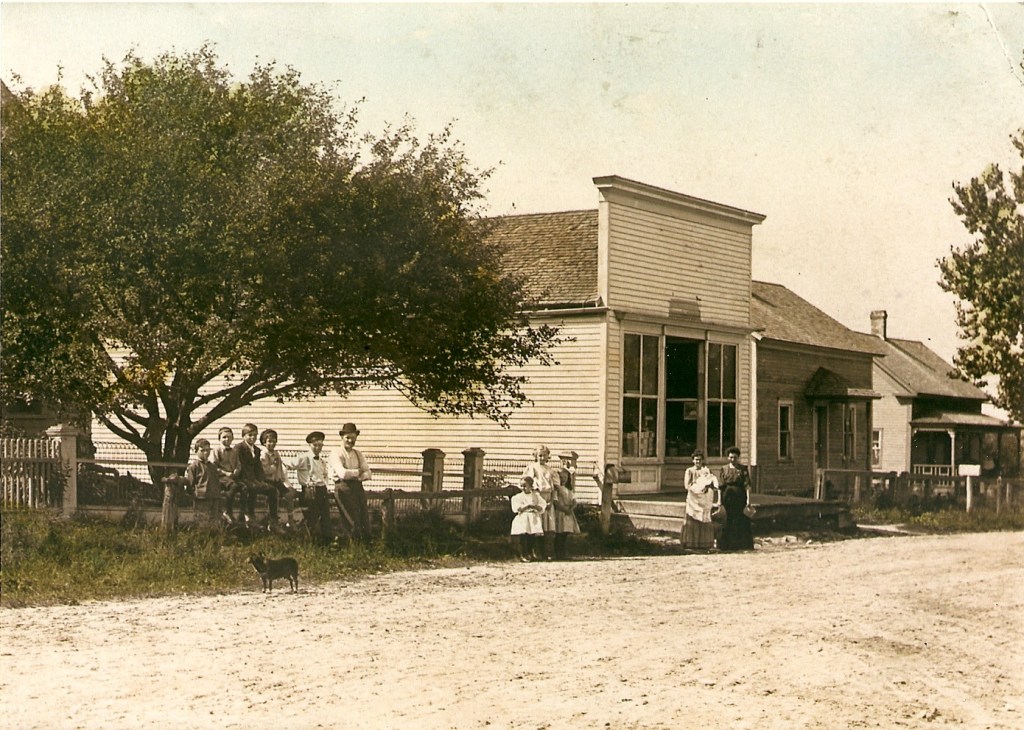
from: https://www.manitowoccountyhistory.org/
The Oxhovd home was a two room log house having four windows, a door, and a floor made of plank. The logs inside were chinked with clay and whitewashed, making a presentable and comfortable home. Heat was obtained from a box heater and there was plenty of wood for fuel.
Marie’s father made ship’s “croaks” in the winter from trees having a goot root structure. These were hand made joints used in ship construction at Manitowoc.
Marie went to school in a little frame structure having homemade seats and desks. Ingeborg Bye (Mrs. K. M. Lvken) a distant relative of Marie’s was one of her first teachers.
One day, Marie and some neighbor children became lost in the woods while searching for wintergreen. They wandered about until they came to the bank of the Fall River and followed it to Clark Mills. Their families were out looking for them as timber wolves were common and furnished unpleasant playmates.
One evening, Marie and her brothers heard wolves howling and proceeded to imitate them until they had a considerable chorus approaching from the woods. They were severely reprimanded by their mother for this pastime.
In 1880, Marie’s father came to Walcott in Richland County North Dakota and filed on a claim. A year later when Marie was 12, she and the Oxhovd family came and lived for a few weeks at the home of August Johnson while a sod house was being build on her father’s claim. Marie and the other children helped build his first Dakota home which was walled and floored with lumber and sodded heavily on the outside. It was about 10×14 feet in size, having two windows and a door. Here she lived for four years.
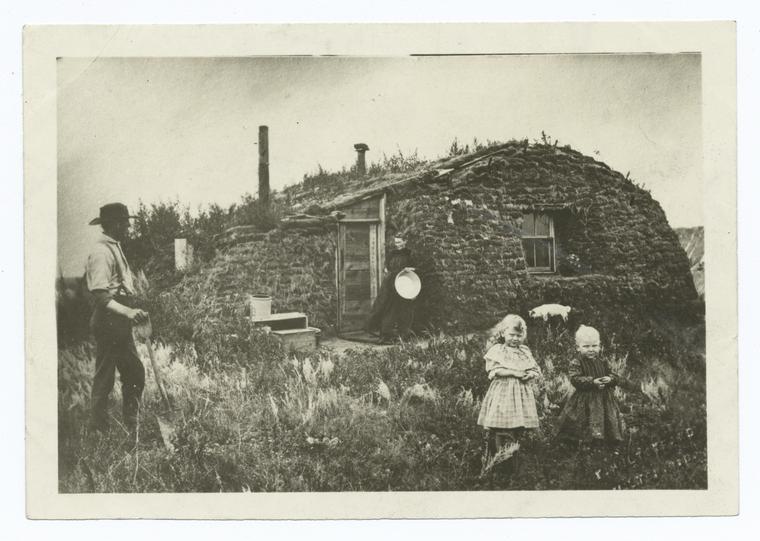
from: https://digitalcollections.nypl.org/
In the fall of 1885 at Walcott North Dakota, Marie experienced her first bad prairie fire. Hay was in the stack and weather conditions were dry. The fire was started from a manure pile a settler far to the northwest had started to burn but had too small of fire break. The fire had been seen in the west for two days and late one afternoon it could be seen approaching ten or fifteen miles away. They got the cattle off the prairie and into the corral. There was not much about a pioneer’s home to burn when the buildings were built of sod,including foods and each location was usually protected with a good sized fire break. The pioneers were not so greatly concerned about the fire except as to the loss of their hay. However, Marie was so excited and hurried to get the cattle in and chores done ahead of the fire that she was worn out from the excitement and went to bed. She slept soundly and did not awaken when the fire passed in the night. It was very black and ugly country in the morning. The cattle still milled about, bawling and seemed to understand the peril of the fire.
If you made it this far, congratulations! Stay tuned for more another story about Lars and Mary.
 Deep Roots Family Tree Blog
Leave a comment