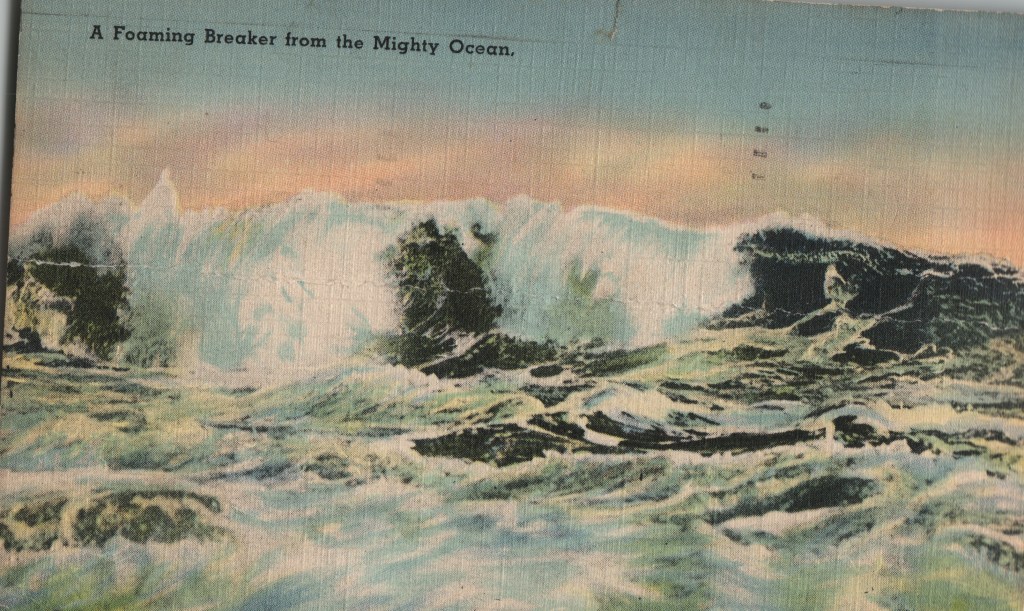
Dear Freda, Thanks very much for the invitation but we are stopping in Phila for dinner so I do not know just when we will arrive home so I would not want you to wait. Love, Bess.
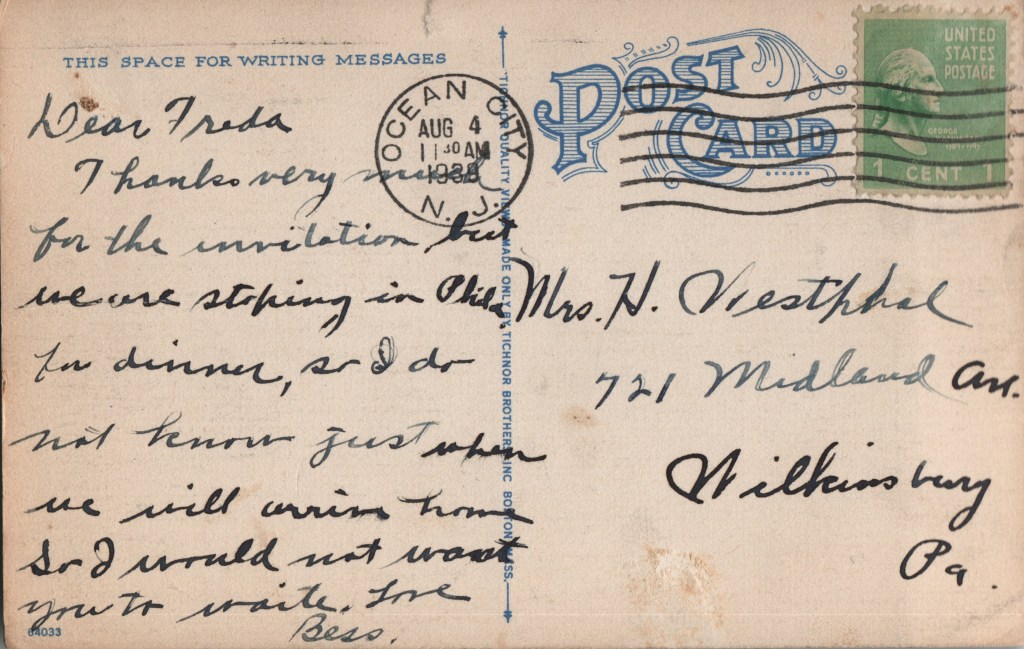
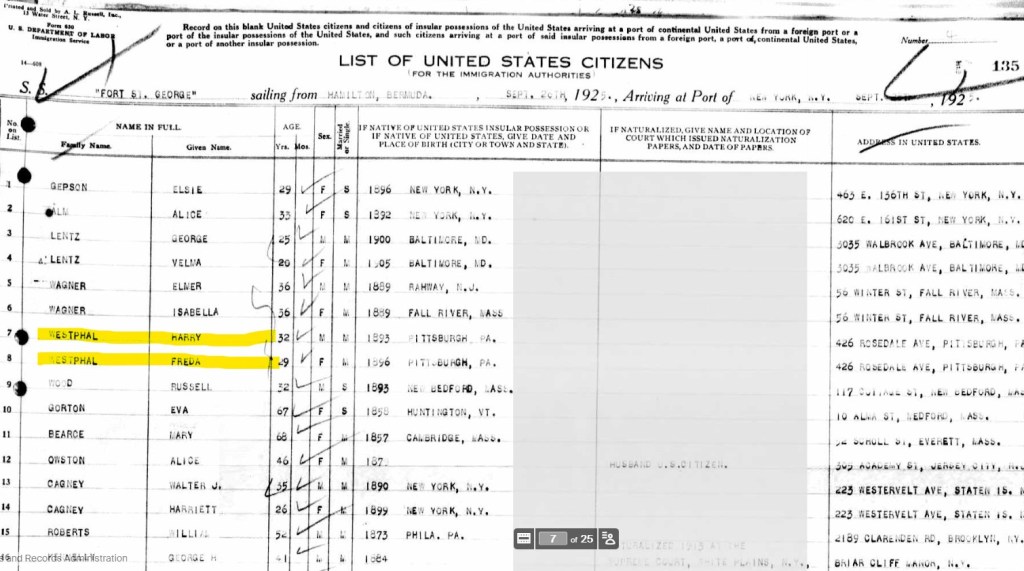
I couldn’t narrow down any Bess who would have sent this postcard from New Jersey, and there isn’t a whole lot of interesting information about Freda (Mrs. H. Westphal), the cards recipient. I found that B. Henry Westphal, Freda’s husband, was married before her. He married Freda in 1925 as a widower with a daughter.
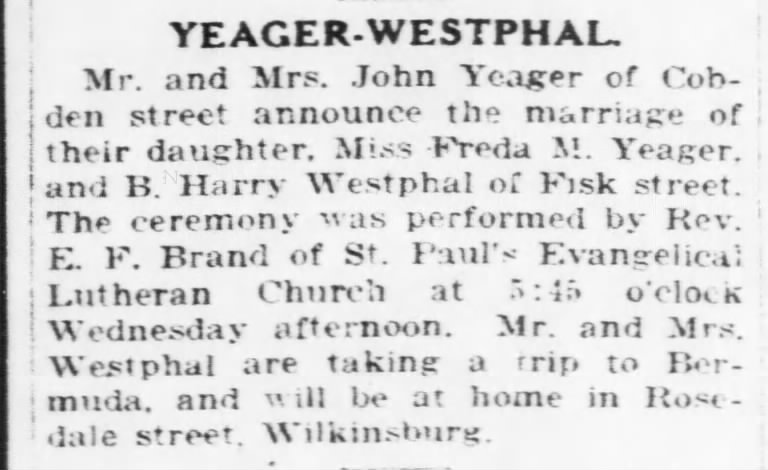
Freda and Henry went to Bermuda on their honeymoon and there are census reports from 1930-1950 documenting the lives of the family. Freda and Henry had 2 (possibly 3) children together, making 4 total for Henry.
Prior to Freda, Harry Westphal married Martha Weisbecker in 1919. The article below was the first piece of documentation I found that had Harry’s “B” as a first initial, which made it much easier to track him down in various census reports. The article from the Pittsburgh Post-Gazette on August 5, 1922, tells us that Martha passed away at the age of 26 in the home of her mother. Henry and Martha had one child together, Helen.
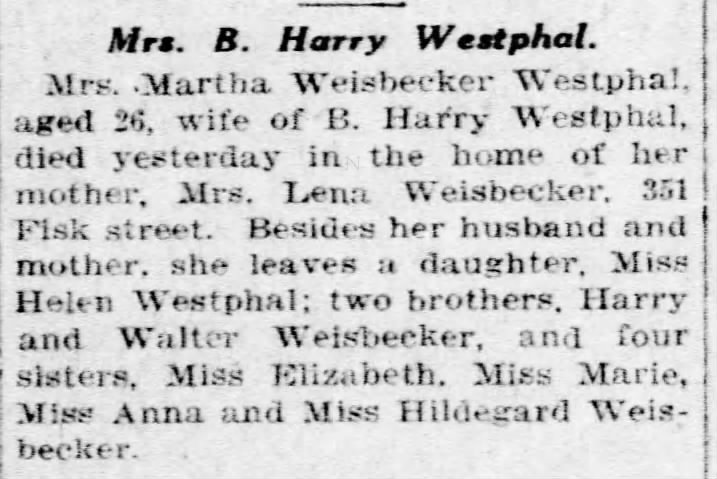
I took a little break from researching when I remembered an article that I clipped and e-mailed to myself. A marriage announcement for a Bertram Harry Westphal and Miss Mathilda P. Weisbecker. She must have gone by Martha. With this new, or recently remembered information, I was able to find a death certificate.
Mathilda (spelled Mathilde on the death certificate) “Martha” Weisbecker was born to Henry Weisbecker and Lena (?), both of Germany, on October 3rd, 1896. She died on August 4th, 1922. Her cause of death was exophthalmic goiter, which she appears to have dealt with for 2 years. The secondary case of death was toxemea (toxemia?).
I can’t explain how excited and sad I get when I’m able to find birth or death certificates. Most of the time, death certificates have the cause of death blocked out. I was happy to see that this one was not. To be able to order birth certificates from some of my ancestors, I had to prove that I was related to them before they were willing to give me the full death certificate. Birth and death certificates often come with the most helpful knowledge, listing parents, birth dates, death dates, etc.
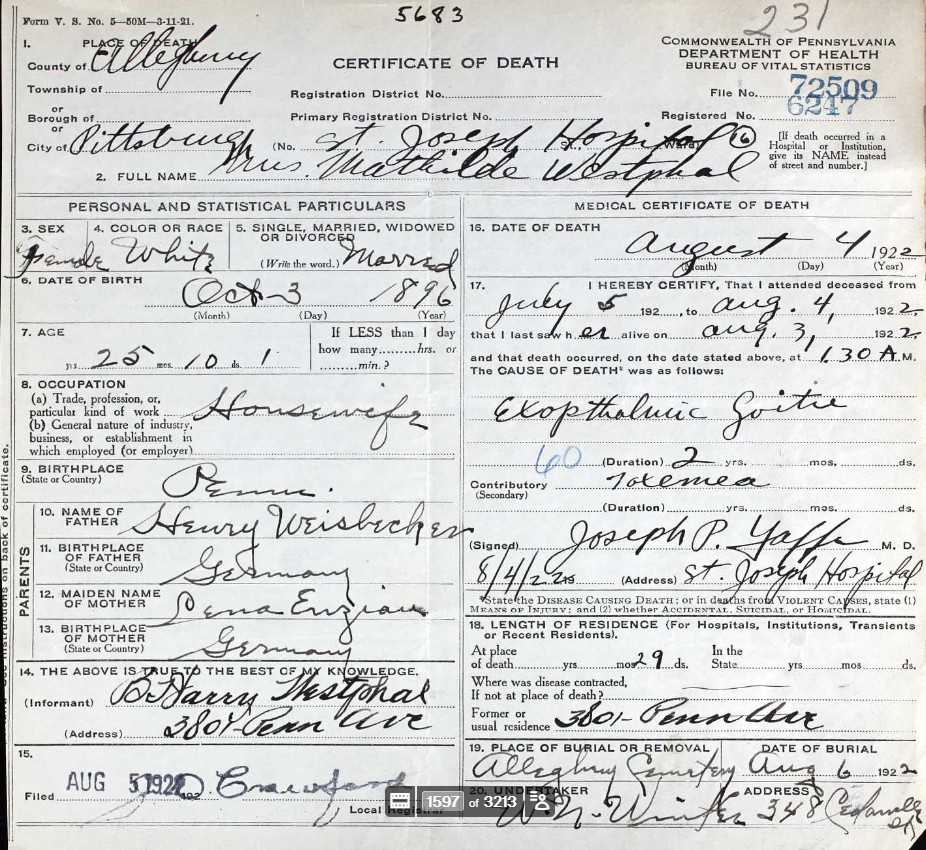
It’s always a little sad to see someone die so young and leave family behind.
*WARNING* – pictures and descriptions of illnesses in the early 1900s follow
An exophthalmic goiter is known today as Grave’s disease, is caused by the immune system producing a protein that mimics TSH, which prompts the thyroid to overproduce hormones. I find anything thyroid related interesting because I, myself, have an underactive thyroid (hypothyroidism), and truly believe that the tiny little organ is responsible for way too many things. The goiter can be attributed to enlarged Thyroid glands.
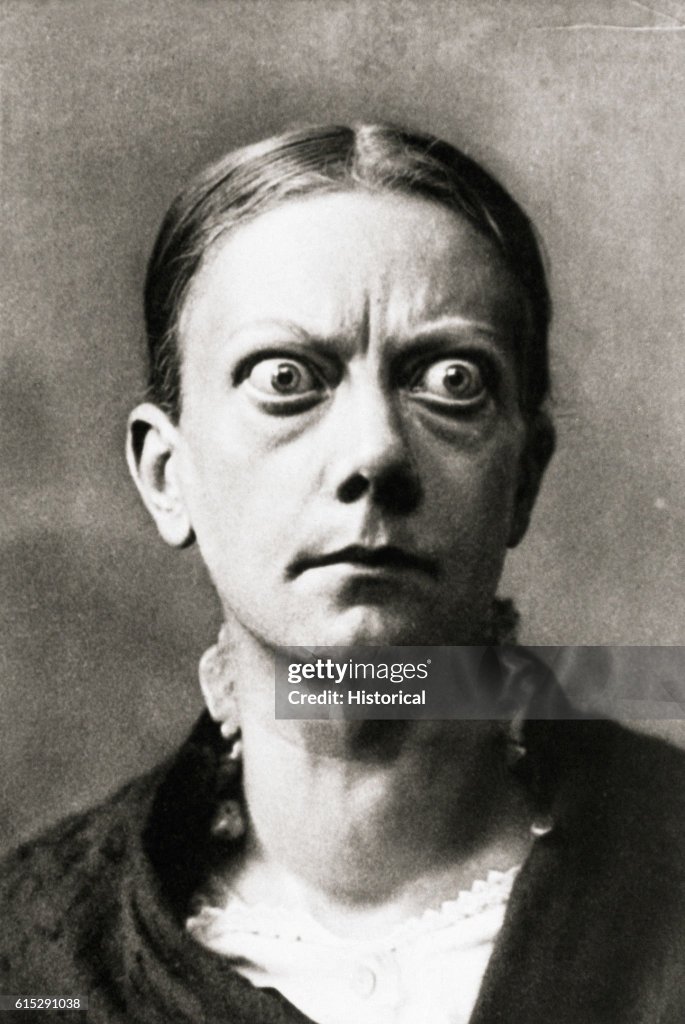
Other symptoms can include:
Enlarged thyroid gland
Bulging eyes
Heart palpitations
Weight loss
Increased basal metabolic rate (BMR)
Blurred or double vision
Difficulty moving the eyes
Dry or watery eyes
From the early 1890s through the mid-1970s, desiccated thyroid was the preferred form of therapy for hypothyroidism (1). Desiccated thyroid appears to be a medication containing dried and powdered thyroid gland tissue and it is supposed to prevent the goiter from getting bigger and help regulate metabolism, growth, and development. Unfortunately, it is not always recommended because of potential side effects, including an increased risk of heart problems and thyroid toxicity. In addition to desiccated thyroid, doctors at the Mayo Clinic were performing thyroidectomies, and removing the thyroid comes with its own host of problems.
For more information about the history of thyroid treatment, I would recommend checking out “A Century of Hyperthyroidism at Mayo Clinic”. (2)
The secondary cause of death was attributed to “toxemea”, and the only thing that I found that relates to the thyroid disease described above was “toxemia”. Up to the mid 1900s, preeclampsia and other conditions related to blood pressure were often classed as toxemia of pregnancy. We do know that Martha and Henry had one child, was she pregnant with another?
Yes, this post is a little more graphic than previous posts. I never have a plan when I start researching a postcard and the people involved, and I tend to go where the paper trail leads me. In this case, we happened to find someone who died way too young from a disease that can be treated relatively well today.
References
- McAninch EA, Bianco AC. The History and Future of Treatment of Hypothyroidism. Ann Intern Med. 2016 Jan 5;164(1):50-6. doi: 10.7326/M15-1799. Erratum in: Ann Intern Med. 2016 Mar 01;164(5):376. doi: 10.7326/L16-0022. PMID: 26747302; PMCID: PMC4980994.
- A Century of Hyperthyroidism at Mayo ClinicSmallridge, Robert C. et al.Mayo Clinic Proceedings, Volume 91, Issue 1, e7 – e12
 Deep Roots Family Tree Blog
Leave a comment